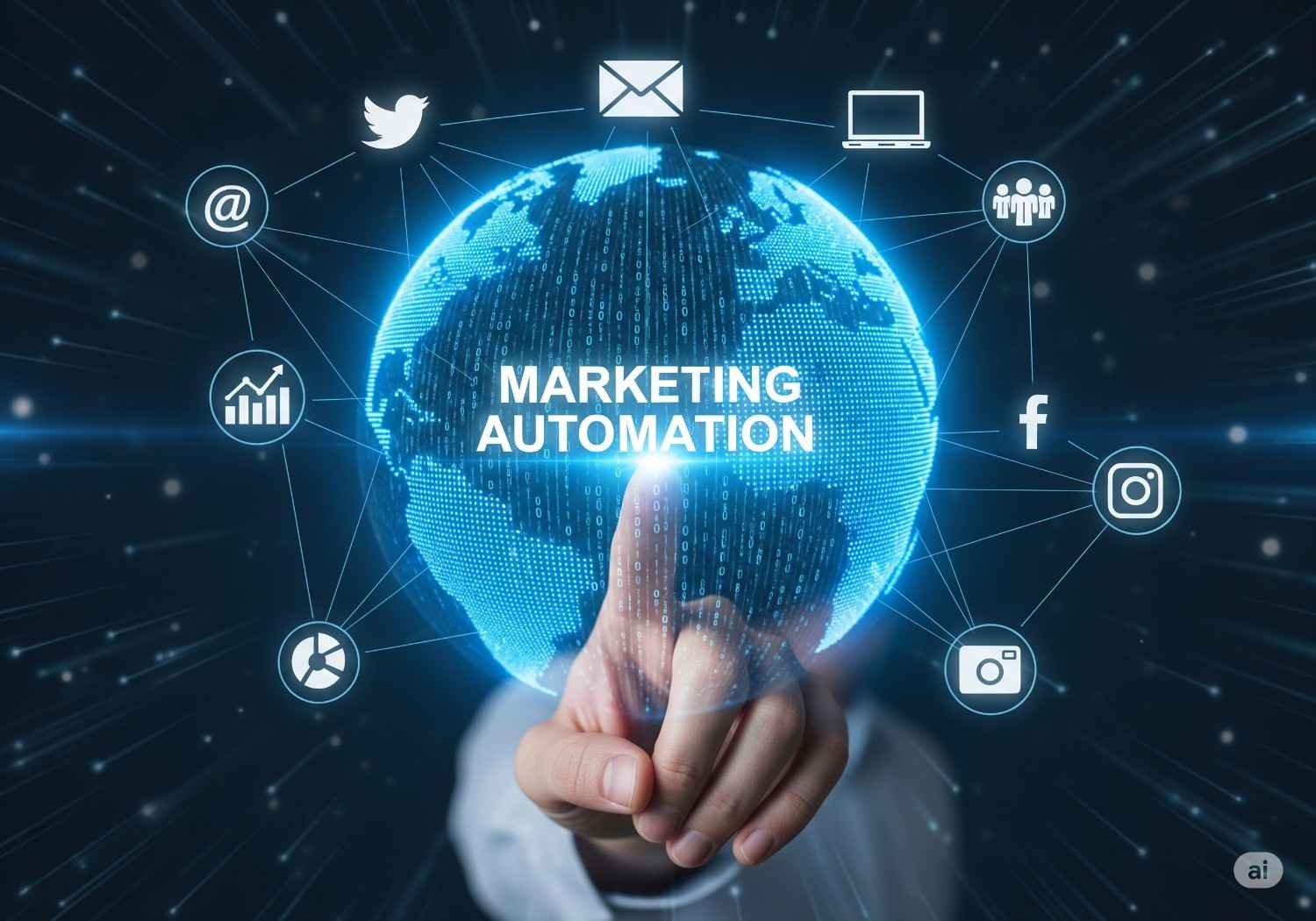
In today's highly competitive digital landscape, businesses are constantly searching for smarter ways to attract customers, improve engagement, and increase revenue. As customer expectations continue to evolve, manually managing marketing campaigns has become both time-consuming and inefficient. This is where marketing automation has emerged as a game-changing solution.
Marketing automation enables businesses to automate repetitive marketing tasks, personalize customer interactions, and generate higher-quality leads with less effort. Whether you're a startup, a growing business, or a large enterprise, implementing marketing automation can significantly improve productivity while delivering measurable business results.
If you're planning to invest in digital transformation, combining marketing automation with professional Web Development & Software Solutions can help create a seamless customer experience across every digital touchpoint.
What Is Marketing Automation?
Marketing automation refers to the use of software and technology to automate marketing activities such as email campaigns, lead nurturing, social media scheduling, customer segmentation, follow-up messages, and performance tracking.
Instead of manually sending emails or following up with every lead, businesses can create automated workflows that deliver the right message to the right customer at the right time.
The primary goal of marketing automation is simple:
- Save time
- Improve customer engagement
- Generate more qualified leads
- Increase sales
- Build long-term customer relationships
Why Marketing Automation Matters in 2026
Modern consumers interact with businesses through multiple channels, including websites, email, social media, search engines, and messaging platforms. Managing these interactions manually often results in inconsistent communication and missed opportunities.
Marketing automation helps businesses stay connected with customers throughout their buying journey while reducing manual work. It allows marketing teams to focus more on strategy and creativity instead of repetitive tasks.
As AI and data analytics continue to evolve, marketing automation has become an essential part of every successful digital marketing strategy.
Top Benefits of Marketing Automation
1. Saves Valuable Time
One of the biggest advantages of marketing automation is time savings.
Routine tasks like:
- Sending emails
- Scheduling social media posts
- Lead follow-ups
- Customer segmentation
- Campaign reporting
Instead of spending hours on repetitive activities, marketing teams can dedicate their time to creating better campaigns and improving customer experiences.
2. Improves Lead Generation
Generating leads is only the first step. Converting those leads into paying customers requires consistent communication.
Marketing automation helps businesses:
- Capture leads automatically
- Qualify leads based on behavior
- Score prospects
- Send personalized follow-up emails
This ensures that sales teams focus only on high-quality prospects who are most likely to convert.
3. Enhances Customer Personalization
Customers expect personalized experiences.
Marketing automation allows businesses to personalize content using customer information like:
- Name
- Purchase history
- Website activity
- Interests
- Location
- Previous interactions
Personalized communication builds trust and significantly improves engagement rates.
4. Boosts Email Marketing Performance
Email marketing remains one of the highest ROI marketing channels.
Marketing automation improves email campaigns by enabling:
- Welcome email sequences
- Cart abandonment reminders
- Product recommendations
- Birthday emails
- Re-engagement campaigns
- Customer onboarding
Automated emails often achieve higher open rates and better conversion rates than one-time promotional emails.
5. Better Customer Journey Management
Every customer follows a different buying journey.
Marketing automation helps businesses deliver relevant content at every stage:
Awareness Stage
- Educational blogs
- Industry insights
- Social media content
Consideration Stage
- Case studies
- Product comparisons
- Webinars
- Free resources
Decision Stage
- Product demos
- Special offers
- Consultation requests
This creates a smoother buying experience and increases conversion opportunities.
6. Increases Sales Efficiency
Marketing and sales teams work more effectively when automation handles repetitive tasks.
Marketing automation can:
- Notify sales teams when leads become qualified
- Assign leads automatically
- Track customer interactions
- Monitor buying behavior
This reduces delays and helps sales representatives close deals faster.
7. Improves Customer Retention
Acquiring new customers is often more expensive than retaining existing ones.
Marketing automation helps improve retention by sending:
- Renewal reminders
- Product updates
- Loyalty rewards
- Feedback surveys
- Educational content
Consistent engagement keeps customers connected with your brand long after their first purchase.
8. Provides Actionable Analytics
Successful marketing decisions depend on accurate data.
Marketing automation platforms provide valuable insights such as:
- Email open rates
- Click-through rates
- Conversion rates
- Lead sources
- Customer engagement
- Campaign ROI
These analytics help businesses continuously improve their marketing strategies.
9. Reduces Human Errors
Manual marketing processes often result in mistakes like:
- Sending duplicate emails
- Missing follow-ups
- Incorrect customer segmentation
- Inconsistent messaging
Automation minimizes these errors while ensuring consistent communication across all channels.
10. Supports Business Scalability
As businesses grow, managing thousands of leads manually becomes impossible.
Marketing automation allows companies to scale without significantly increasing marketing workload.
Whether handling hundreds or thousands of customers, automated workflows continue operating efficiently.
Marketing Automation Across Different Industries
Marketing automation is no longer limited to large enterprises.
Today it is widely used across industries including:
- Healthcare
- Education
- Real Estate
- Manufacturing
- E-commerce
- Finance
- SaaS
- Hospitality
- IT Services
- Professional Consulting
Every industry benefits from improved communication and faster lead nurturing.
Essential Features of a Marketing Automation Platform
When selecting a marketing automation solution, businesses should look for features such as:
- Email automation
- Lead scoring
- CRM integration
- Landing page creation
- Workflow automation
- Customer segmentation
- SMS marketing
- Social media management
- Analytics dashboard
- AI-powered recommendations
Choosing the right platform ensures maximum return on investment.
How AI Is Transforming Marketing Automation
Artificial Intelligence has significantly enhanced marketing automation capabilities.
AI can now:
- Predict customer behavior
- Recommend personalized content
- Optimize email send times
- Generate customer insights
- Improve audience segmentation
- Automate customer support through chatbots
Businesses integrating AI into their automation strategy gain a competitive advantage by delivering smarter and more personalized customer experiences.
For companies planning advanced automation strategies, investing in AI Development Services can help build intelligent solutions that improve customer engagement, automate business processes, and drive long-term growth.
Best Practices for Successful Marketing Automation
To maximize results, businesses should follow these best practices:
- Clearly define marketing goals.
- Segment your audience based on customer behavior.
- Create valuable and relevant content.
- Avoid excessive automation that feels impersonal.
- Monitor campaign performance regularly.
- Continuously optimize workflows.
- Align marketing and sales teams.
- Test campaigns before launching.
- Maintain clean customer data.
- Focus on delivering value instead of constant promotions.
Common Marketing Automation Mistakes to Avoid
Many businesses fail to achieve results because they:
- Automate poor-quality content
- Ignore customer personalization
- Purchase low-quality email lists
- Fail to monitor analytics
- Overcomplicate workflows
- Neglect mobile optimization
- Forget regular campaign updates
Avoiding these mistakes helps ensure sustainable marketing success.
Future Trends in Marketing Automation
Marketing automation continues to evolve rapidly.
Some of the biggest trends expected in 2026 include:
- AI-driven customer journeys
- Predictive analytics
- Voice search marketing
- Hyper-personalization
- Omnichannel automation
- Conversational AI
- Advanced customer segmentation
- Real-time campaign optimization
- Automated content recommendations
Businesses adopting these innovations early will be better positioned for future growth.
Conclusion
Marketing automation has become much more than a convenience—it's a strategic investment for businesses looking to grow efficiently. By automating repetitive tasks, improving customer engagement, personalizing communication, and providing valuable insights, businesses can achieve better marketing performance while reducing operational costs.
Whether your goal is to generate more qualified leads, increase customer retention, or improve campaign ROI, marketing automation provides the tools needed to scale effectively. When combined with strong digital infrastructure and intelligent technology solutions, it creates a powerful foundation for sustainable business growth.
Companies that embrace marketing automation today will be better equipped to compete, innovate, and deliver exceptional customer experiences in the years ahead.
Frequently Asked Questions (FAQs)
1. What is marketing automation?
Marketing automation is software that automates repetitive marketing tasks such as email campaigns, lead nurturing, customer segmentation, and campaign tracking to improve efficiency and conversions.
2. Is marketing automation suitable for small businesses?
Yes. Small businesses can save time, improve lead management, and scale their marketing efforts without significantly increasing resources.
3. Does marketing automation replace human marketers?
No. It automates repetitive tasks while allowing marketers to focus on strategy, creativity, customer relationships, and business growth.
4. What are the biggest benefits of marketing automation?
The biggest benefits include time savings, better lead generation, personalized customer experiences, improved sales efficiency, higher ROI, and data-driven decision-making.
5. How does AI improve marketing automation?
AI enhances marketing automation by predicting customer behavior, optimizing campaigns, personalizing content, and providing deeper insights for better business decisions.